Contents
New York leads with 384,500 millionaires, Shenzhen grew 142% in a decade. Where Asia, Dubai and NAC's destination cities sit on the global wealth map.
According to Henley & Partners' World's Wealthiest Cities Report 2025 – the latest edition we could open – New York is still home to more millionaires than anywhere else, with 384,500, followed by the San Francisco Bay Area, Tokyo and Singapore. The more interesting story is speed: Shenzhen, Hangzhou and Dubai each more than doubled their millionaire populations in a decade, while London and Moscow were the only two top-50 cities to shrink. For Vietnamese investors, the map shows wealth tilting towards Asia and the Gulf – and the cities that welcome international capital tend to attract the wealthy fastest.
Source: Henley & Partners and New World Wealth, World's Wealthiest Cities Report 2025 (end-2024 data)
We usually talk about wealth by country: which nations are rich, which are poor, which tax heavily. In practice, wealthy families pick a city before they pick a country. They live where there are international schools, well-connected airports, private banks and a property market deep enough to buy into or sell out of without a fuss. That makes a city ranking more revealing than a national one about where money is actually going.
This piece walks through five charts and a property-price table, from the familiar millionaire capitals to Asia's rising hubs, before stopping at the cities linked to the residence programmes NAC follows. At the end we flag the limits of the dataset.
Fifty Cities, a Shifting Order
The 2025 top ten is still dominated by established financial centres. After New York and the Bay Area, Tokyo is third with 292,300 millionaires, helped by the Nikkei's recovery, and Singapore is fourth with 242,400. Los Angeles overtook London for the first time to take fifth place, pushing the British capital down to sixth with 215,700.
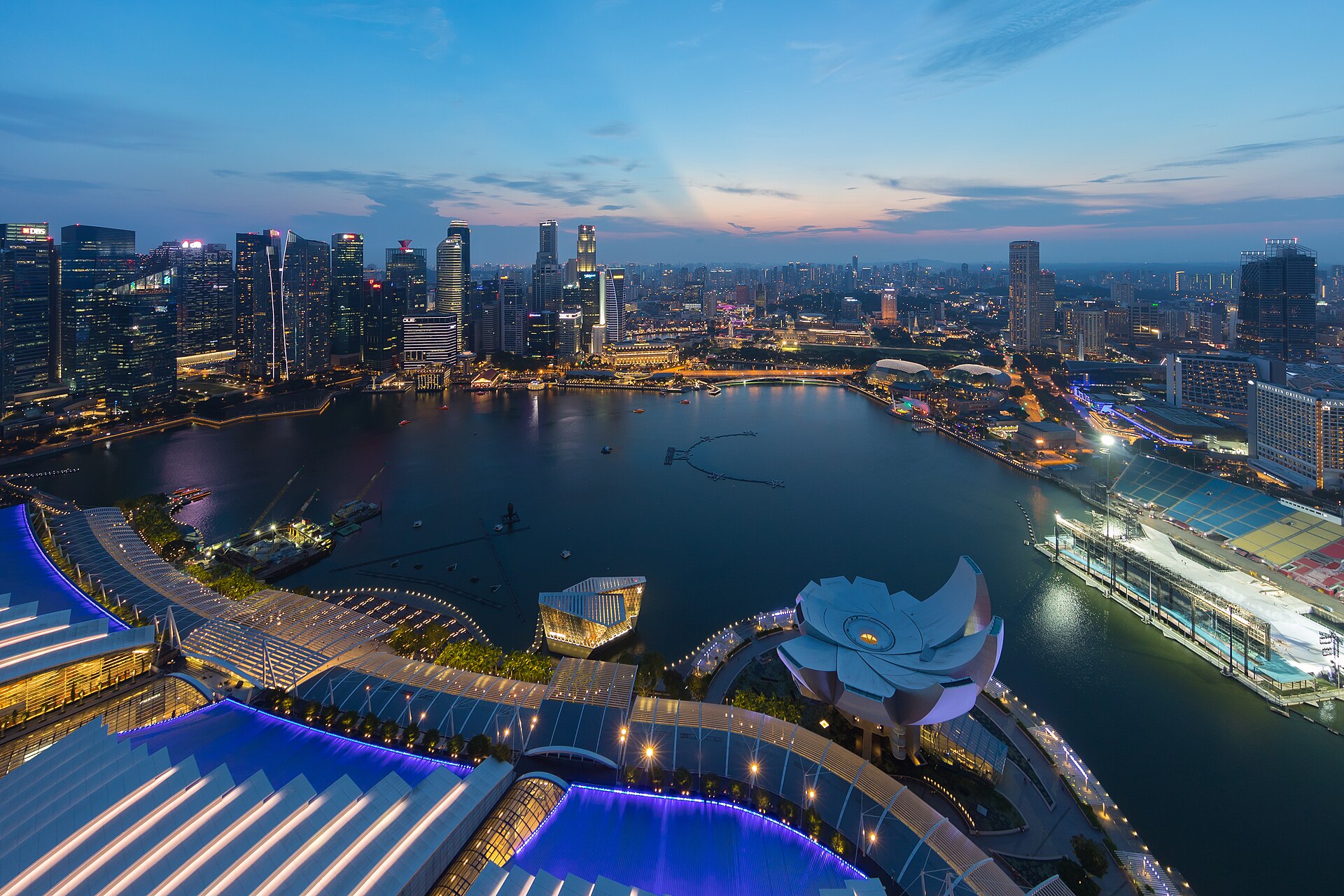
America has the numbers; Asia has the next-largest share. Ten of the 50 wealthiest cities are in the US. Asia supplies seven of the top 15 if you count Sydney's Oceania alongside it, and Singapore is the case worth studying: a small city-state with no natural resources that holds fourth place worldwide on the strength of rule of law, a deep financial system and policies built to attract wealthy residents.
The top moves slowly, but it does move. Hong Kong overtook Sydney for eighth, Chicago entered the top ten for the first time, and Beijing and Shanghai slipped to 12th and 14th. Seoul was the biggest faller, dropping from 19th to 24th.
Asia: Where Wealth Is Being Made Fastest
If the top 15 is a snapshot, ten-year growth is the trailer for what comes next – and here Asia stands out. Shenzhen, home to Huawei, Tencent and BYD, grew its millionaire population by 142% between 2014 and 2024 to 50,800. Hangzhou grew 108%, and India's Bengaluru 120%.
Asia's new wealth is overwhelmingly founder-led business wealth.
Two Asias coexist. One is the long-established wealth centres such as Tokyo and Hong Kong, almost flat over ten years. The other is the tech and manufacturing cities of China and India, plus Singapore, where millionaire numbers rose by half or more – or doubled. Asia's new wealth is overwhelmingly founder-led business wealth, which is exactly the path many Vietnamese families are on.
What about Vietnam? Neither Ho Chi Minh City nor Hanoi appears in the 2025 top 50. But Henley's 2023 edition, as reported by VnEconomy, put Ho Chi Minh City at around 7,700 millionaires – including 15 worth over USD 100 million and three billionaires – after 82% growth over a decade, among the ten fastest-growing cities in the world at the time. The 2024 edition went on to call it "Asia's next big millionaire hotspot". Those are older figures over a different period, so we keep them out of the chart above.
The Super-Rich Choose Cities With a Clear Way In
One level up, Henley tracks more than 100 cities by the number of residents worth USD 100 million or more. Dubai, with 237, is forecast to double its centi-millionaire population over the next ten years. Several cities linked to residence-by-investment routes also sit on the high-growth list, from Athens to St. Julian's and Sliema in Malta, Limassol and Panama City.
Small numbers, clear direction. Athens has just 42 people in this bracket and Limassol 22, yet Henley places both in its high-growth group and points to inward wealth migration and formal residence pathways as the reason. Henley's Dominic Volek says the super-rich now "design their geographical footprints" with the same care they apply to an investment portfolio. Lisbon also made its debut in the top 50 cities for millionaires, in 50th place with 22,200.
Seven of the ten wealthiest cities sit in countries with residence-by-investment programmes. That observation comes from Henley's own CEO, Juerg Steffen, in the 2025 press release. Henley sells investment migration advice, so it has a stake in the point – but the overlap between open-door policy and capital inflows is still worth weighing.
What a Square Metre Costs Where the Money Is
Concentrated wealth drives up house prices. In Monaco, where more than 40% of residents are millionaires, prime apartments regularly exceed USD 38,800 per square metre. The table puts the most expensive cities next to Tokyo – a major millionaire hub with far lower prices.
Expensive is not the same as attractive: a market that is already pricey usually offers thin rental yields.
| City | Prime 100–200 m² apartment (USD/m²) | Note |
|---|---|---|
| Monaco | 38,800 | Also No. 1 for wealth per capita |
| New York | 27,500 | Most millionaires in the world |
| Hong Kong | 26,300 | 8th for millionaires |
| London | 24,000 | Millionaires down 12% in a decade |
| Paris | 20,400 | Overtook Sydney for 6th on price |
| Sydney | 19,500 | 9th for millionaires |
| Tokyo | 14,700 | 3rd for millionaires |
Expensive is not the same as attractive. A market that is already pricey usually offers thin rental yields. Cities that are drawing more wealthy residents while prices remain moderate – Athens, Limassol or Kuala Lumpur, for instance – are often where international investors look for a balance between income and capital growth.
Reading the Data Properly
These figures are New World Wealth estimates, not official statistics. Henley's methodology defines "wealth" as liquid investable assets only – listed shares, cash, bonds and crypto – and excludes real estate. People are located mainly by where they work, using public sources such as LinkedIn. Tax Policy Associates, a UK think tank, has questioned the reliability of the approach. Note too that the latest edition we found was published on 8 April 2025 with data to the end of 2024; there was no 2026 edition at the time of writing. Read the rankings as a compass, not a precise measurement.
A practical strategy for Vietnamese investors
Choose a city, not just a country. When weighing a second residence, look at the specific city where you would live or hold assets: schools, flights, property liquidity and the local business community.
Track momentum as well as size. Fast risers such as Dubai and Athens often have more room to appreciate than saturated capitals. An apartment like The One Glyfada in Athens links European residence to a market that is drawing wealthy newcomers.
Diversify across hubs. Pairing a European city with a Gulf hub such as Dubai or an Asian one such as Kuala Lumpur keeps a family from riding a single region's cycle.
Weigh yield alongside prestige. The most expensive cities tend to pay the lowest yields. Compare price per square metre with real achievable rent before you commit.
Frequently asked questions
Which city has the most millionaires?
In Henley & Partners' 2025 edition, New York leads with 384,500 millionaires, followed by the San Francisco Bay Area (342,400) and Tokyo (292,300).
Is Ho Chi Minh City in the ranking?
Not in the 2025 top 50. The 2023 edition estimated around 7,700 millionaires there and placed it among the world's fastest-growing cities over ten years.
Do these numbers include property?
No. Henley counts only liquid investable wealth such as shares, cash, bonds and crypto, so millionaire counts in markets where wealth sits mainly in real estate – Vietnam included – may be understated.
NAC strategic insight
The millionaire map makes a simple point: money follows cities that open up in the right way – clear law, predictable tax and formal residence routes for foreigners. Vietnamese families have created wealth remarkably fast over the past decade, yet most of it still sits in one city, one currency and one legal system.
NAC helps families choose a second city on solid ground: comparing residence programmes, vetting the assets attached to them and modelling real cash flow. If you'd like to start from your own family's plans, book a consultation with NAC.
Sources
- Henley & Partners — World's Wealthiest Cities Report 2025, press release (2025)
- Henley & Partners — World's Wealthiest Cities Report 2025: Top 50 Cities and methodology (2025)
- VnEconomy — HCMC among 10 fastest-growing cities for the super-wealthy (2023)
- VietNamNet — HCM City among cities with wealth growth potential over next decade (2024)
- Tax Policy Associates — analysis of Henley & Partners' methodology (2025)