Contents
Cyprus or Malta as Your Island Base: Residence Rules, Daily Life and 6 NAC Addresses
Cyprus grants PR from €300,000 in new property; Malta asks €375,000 plus €99,000 in fees. Rules, living costs and six listings side by side to pick the right island.
Cyprus and Malta are both Mediterranean island members of the EU, both use the euro and both run residence programmes linked to property. The difference lies in the detail. Cyprus grants permanent residence to buyers of new property from €300,000 (excluding VAT) who can show income from abroad, with very low government costs. Malta requires a purchase from €375,000 or a rental from €14,000 a year, plus €99,000 in total government fees – but in return offers movement within the Schengen area and an officially English-speaking environment. Which island fits depends on whether your family prioritises yield, entry cost or ease of travel in Europe.
Source: Zeno Legal (June 2026); Chetcuti Cauchi Advocates (22 July 2026); Eurostat via CNA (18 June 2026); NAC listing data, October 2026
Plenty has been written comparing the paperwork of the two programmes. This piece looks from another angle: if a Vietnamese family actually plants one foot in the Mediterranean, what do daily life, entry cost and asset quality look like on each island – through six specific addresses in NAC's book?
Cyprus Residence Rules: Cheap to Enter, Strict on Income
According to Zeno Legal's guide, updated in June 2026, Cyprus permanent residence under Regulation 6(2) requires at least €300,000 excluding VAT in new property bought directly from a developer; resale property does not qualify. The investment can be split across one or two residential units. At the time of application at least €300,000 plus VAT must already be paid, including at least €200,000 plus VAT wired from abroad.
The income condition is the part many families overlook: the main applicant needs secured income of at least €50,000 a year from outside Cyprus, plus €15,000 for a spouse and €10,000 per dependent child. Children up to 25 who are unmarried, financially dependent and in full-time study can be included; parents can no longer be added since 2023.
In return, Cyprus PR is valid for life, provided the holder enters Cyprus at least once every two years. Holders may not take paid employment in Cyprus but may let the property. One important caveat: permanent residence is not tax residence, and Cyprus, although an EU member, is not part of the Schengen area.
Malta Residence Rules: Pricier, But More Flexible
According to Chetcuti Cauchi Advocates' MPRP 2026 guide, updated on 22 July 2026, applicants to the Malta Permanent Residence Programme (MPRP) must buy a residential property from €375,000 or rent one from €14,000 a year, with the lease registered with the Housing Authority. Government payments comprise a €37,000 contribution, a €60,000 administration fee and a €2,000 donation to a registered NGO – €99,000 in total for the applicant, spouse and minor children.
Malta also applies a capital test: €500,000 with at least €150,000 in financial assets, or €650,000 with at least €75,000 in financial assets. For the first five years, the agency monitors compliance through annual declarations and possible random property checks.
Reading the chart correctly. In Cyprus, the €300,000 sits in an asset the family owns. On Malta's purchase route, €375,000 is an asset while €99,000 is a non-refundable cost. On the rental route, a family spends about €70,000 in rent over five years plus €99,000 in fees – owning nothing, but keeping the rest of its capital free to invest elsewhere.
Island Life: Language, Travel and Costs
Language and schools. English is an official language of Malta, alongside Maltese; in Cyprus the official languages are Greek and Turkish, but English is widely used in business and in Limassol. For families with school-age children, both islands have international schools, but Malta has the advantage of an everyday English environment.
Travel in Europe. Malta is in the Schengen area, which makes a Maltese residence permit more convenient for moving around the bloc. Cyprus is in the EU but not yet in Schengen – a practical difference for families who travel in Europe often.
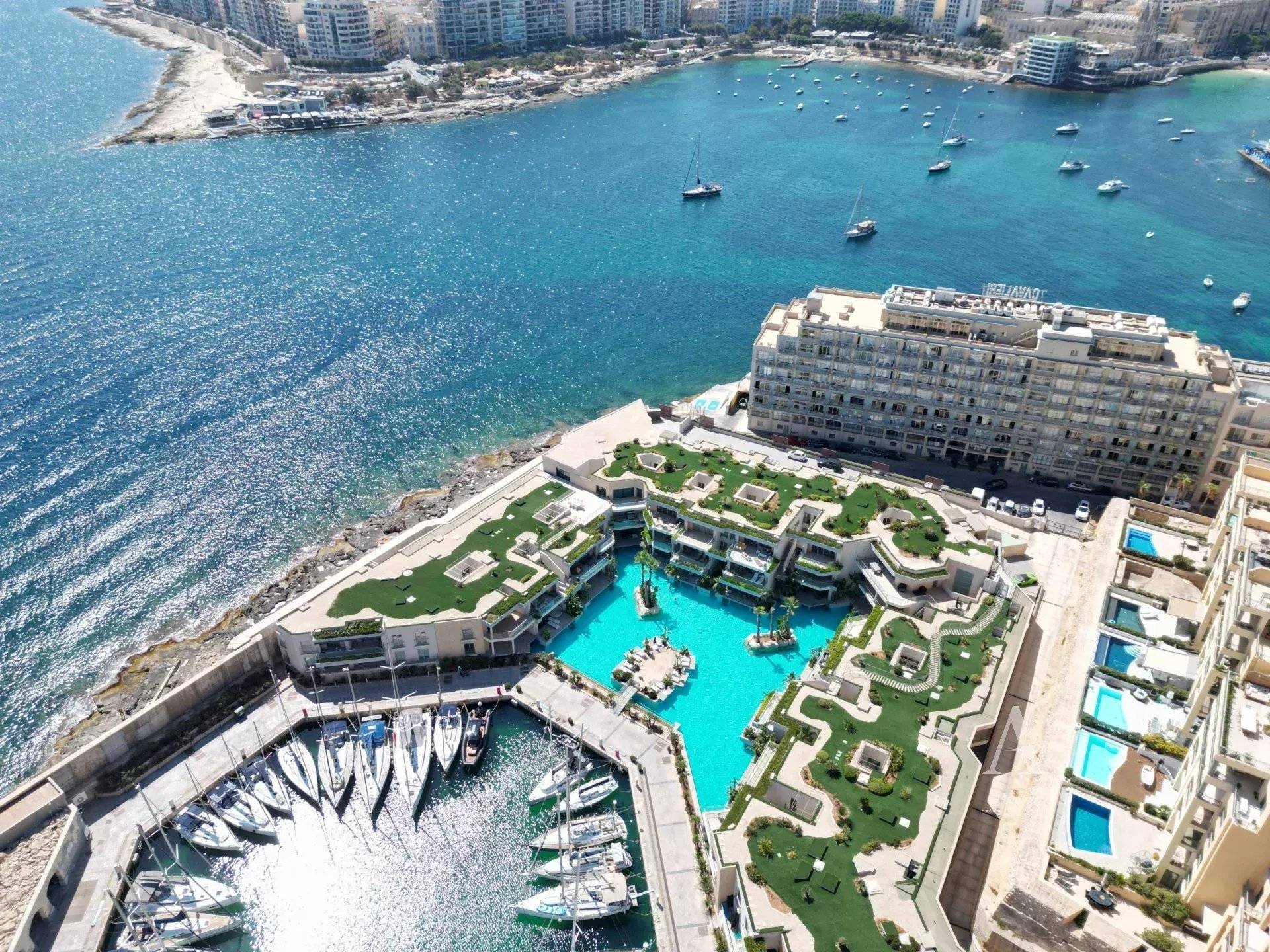
Cyprus PR is valid for life, provided the holder enters the country at least once every two years.
Cost of living. According to Eurostat data reported by the Cyprus News Agency on 18 June 2026, Cyprus's consumer price level in 2025 stood at 89% of the EU average. In Malta, household electricity in the second half of 2025 cost just €0.1282 per kWh, less than half the EU average of €0.2896 per kWh, according to Eurostat. Both islands are cheaper than western Europe on many items, but rents in Limassol, Sliema and St Julian's now approach those of big cities.
Six Addresses, Two Investment Styles
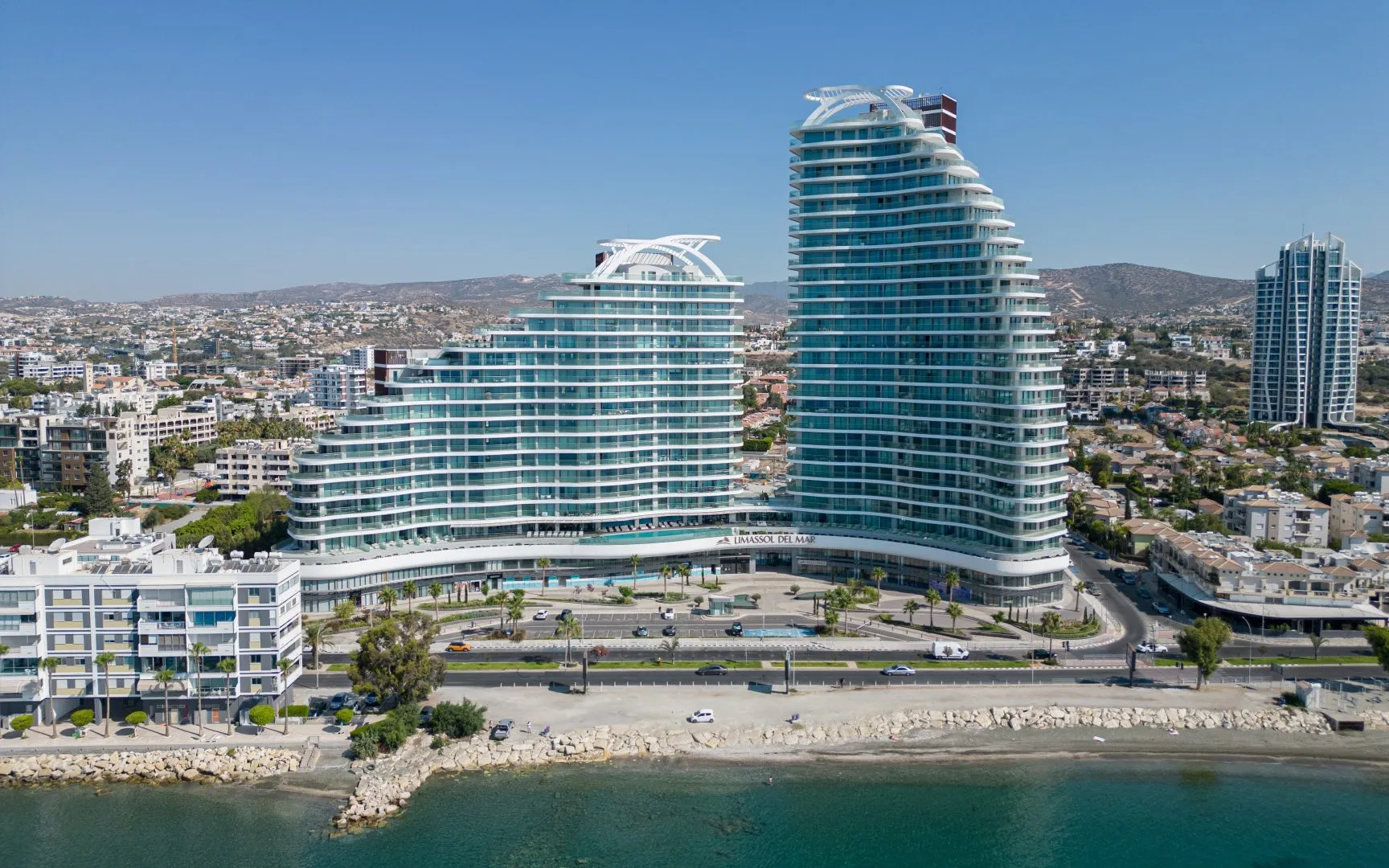
Limassol – the cash-flow city. Limassol is Cyprus's financial and shipping capital. Limassol Blu Marine on the Thomas Edison Street seafront promenade starts at €748,000, is move-in ready, and carries a 6.5% gross yield and a NAC score of 83/100 per NAC's listing data. At the top of the market, the Limassol Del Mar beachfront penthouses on Georgiou A start at €1,650,000, with the same 6.5% gross yield and a NAC score of 88/100.
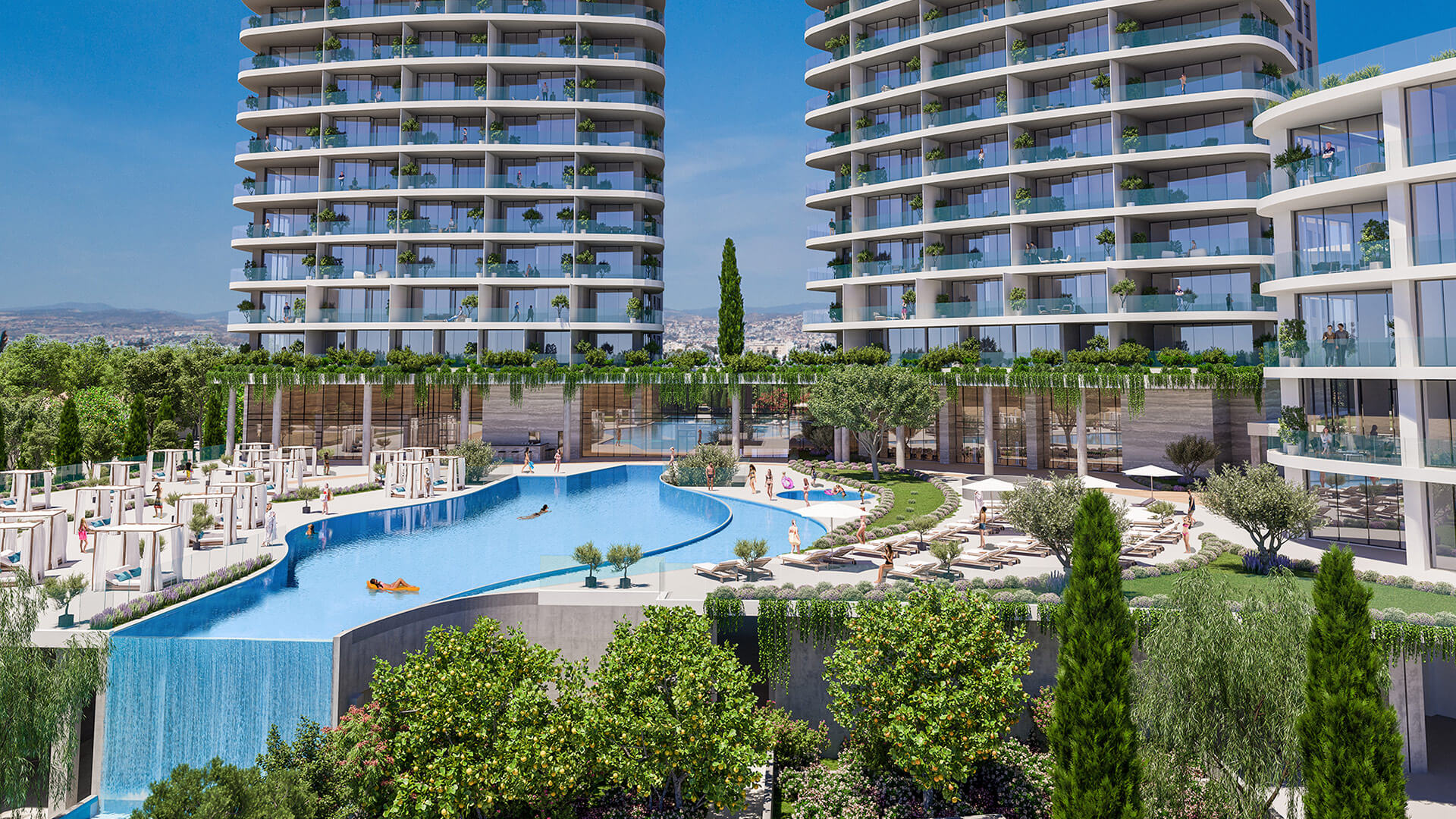
In Cyprus the €300,000 sits in an asset the family owns; in Malta, €99,000 is a non-refundable cost.
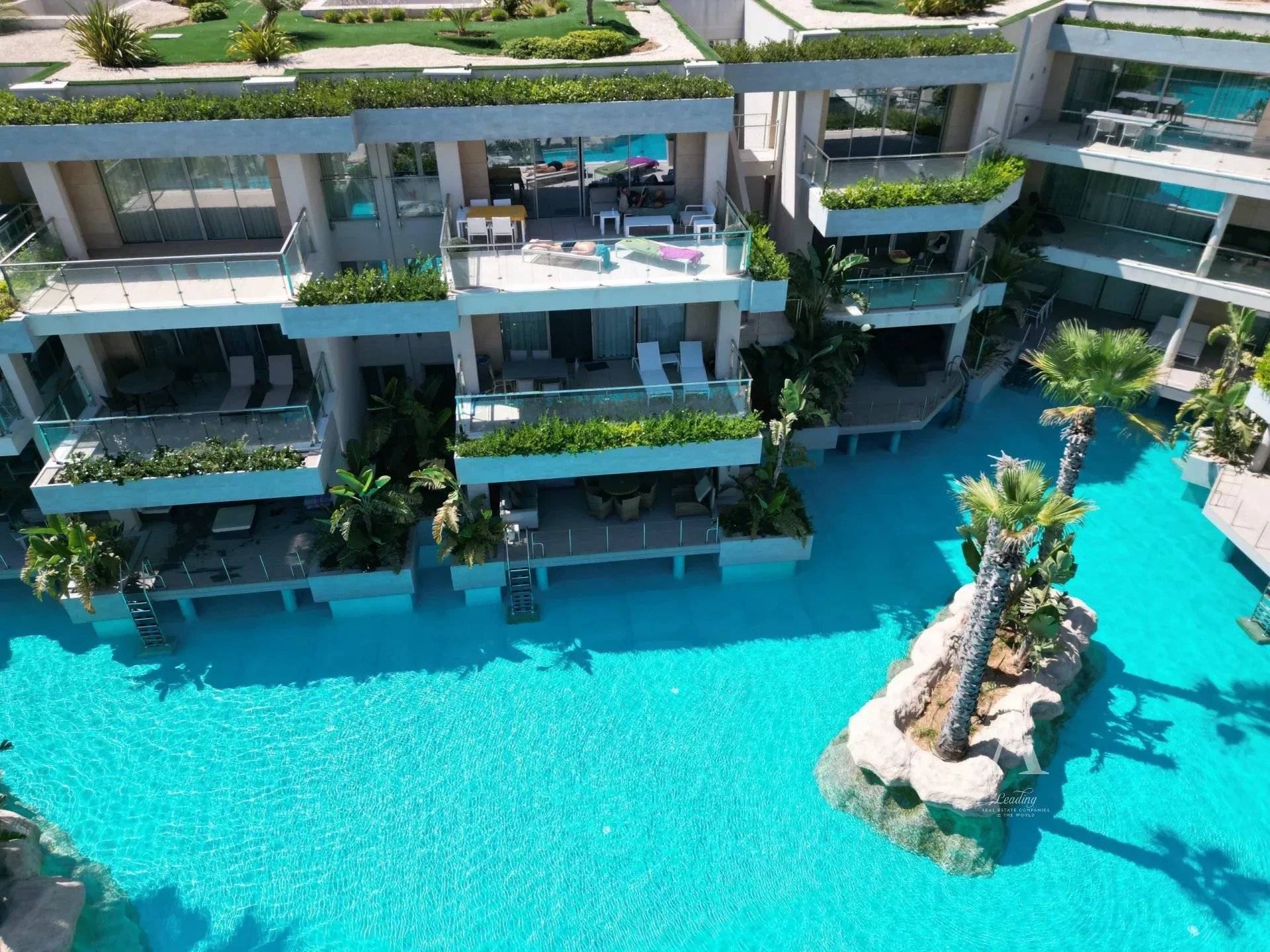
Paphos – the lowest entry point. Pearl Park by Aristo Developers in Paphos is a gated community with a shared pool and sea views, from €230,000, with a 5.5% gross yield, a NAC score of 76/100 and handover expected in Q4 2026. Because its entry price is below the €300,000 threshold, a family would need a larger unit or a two-unit combination – which Cypriot rules allow – to qualify.
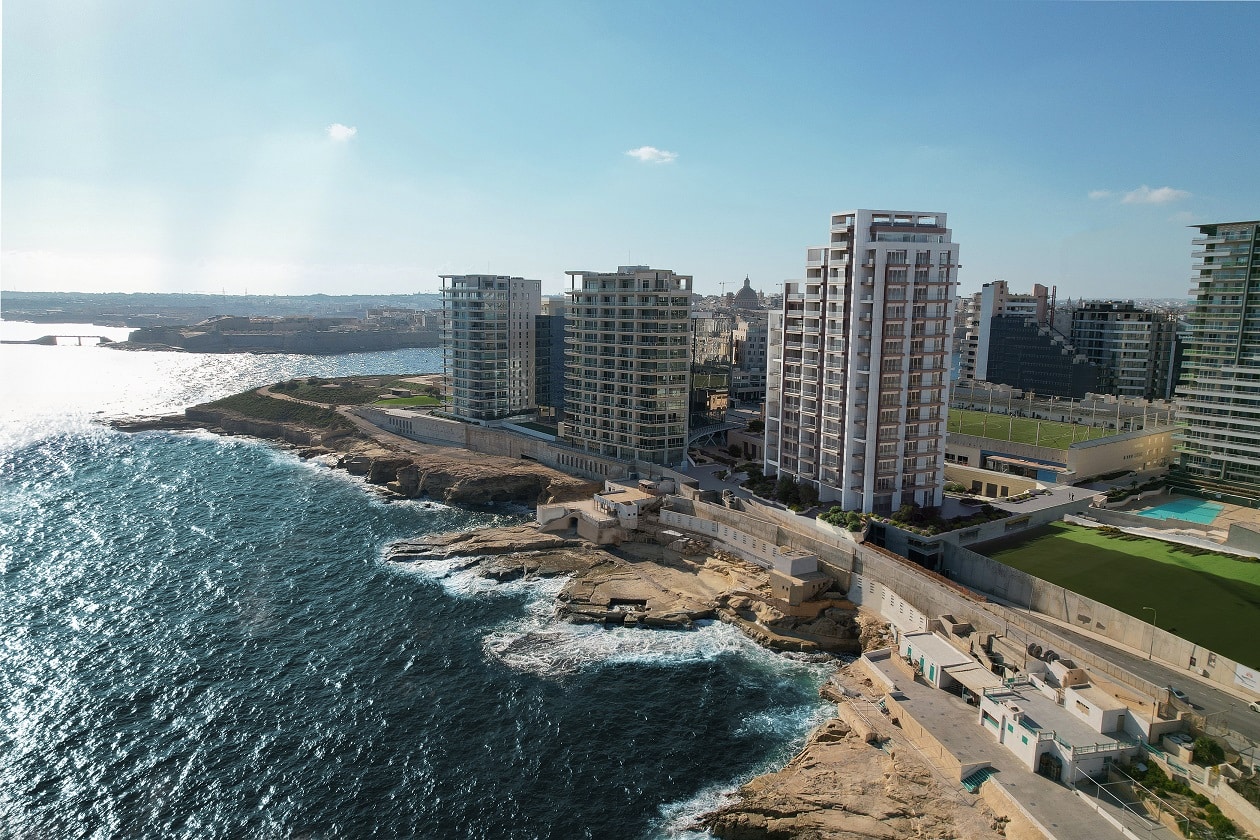
Malta – assets that hold value more than they yield. At the tip of the Sliema peninsula, Fortress Gardens at Tigné Point is the final phase of the MIDI plc regeneration, from €1,400,000, with a 3.0% gross yield and a NAC score of 81/100. Portomaso in St Julian's, Tumas Group's marina complex, sits in a Special Designated Area, so non-EU buyers need no AIP permit; it starts at €3,700,000 with a 3.5% yield and a NAC score of 84/100. Smaller still, The Ibragg Project in Swieqi has just five units, from €895,000, with a 3.8% yield, a NAC score of 72/100 and completion targeted for Q4 2026.
The yield gap says a lot about the different roles the two islands play. Cyprus, and Limassol in particular, suits families who want an asset that pays its own way through long-term tenants, often international professionals. Malta suits families who treat property as a store of value in a scarce location, accepting a lower yield in exchange for Schengen and an English-speaking environment.
A practical strategy for Vietnamese investors
Check income before choosing the island. If your family would struggle to show €50,000 of stable income from outside Cyprus, Malta's capital-based test may fit better.
Add up the total cost, not just the price. Include VAT in Cyprus, the €99,000 in Malta, stamp duty, legal fees and five years of running costs.
Confirm "first sale" status. In Cyprus the unit must be new and bought from the developer; get written confirmation before paying a deposit.
Think about Schengen and schools. If your children will study or travel in Europe often, Malta's Schengen and English advantages may be worth more than the cost difference.
NAC's Cyprus residence-by-investment programme guide and Malta permanent residence programme guide set out each step in detail. To set these six projects against other markets, see the NAC Residence Index rankings, and browse NAC's Cyprus property collection for every option on the island.
Explore on NAC



See also: Residence Index scores for each Cyprus and Malta project · Every NAC listing in Cyprus · The Property Hub with yield filters · The residence programme comparison table
Frequently asked questions
Can I buy a resale property in Cyprus to get PR?
No. According to 2026 legal guidance, Cyprus PR under Regulation 6(2) requires new property bought directly from a developer; resale property doesn't qualify.
Does Malta require me to buy?
No. Applicants can rent from €14,000 a year instead of buying from €375,000, but still pay €99,000 in government fees and must meet the capital test.
Can I work with residence on either island?
In Cyprus, investment-route PR holders may not take paid employment but may be directors or shareholders of a Cyprus company. For Malta, check the specific work conditions with a lawyer before you plan around them.
NAC strategic insight
Cyprus and Malta are not two versions of the same product. Cyprus is the efficient entry, with well-yielding assets in Limassol and lifelong residence at almost no government cost. Malta is pricier with lower yields, but brings Schengen, English and scarce addresses such as Tigné Point and Portomaso. What matters is choosing the right island for the stage your family is at.
NAC can check your income and capital position, total up the cost for each island and match you to the right unit among these six addresses. Book a consultation with NAC to start from your own family's situation.
Sources
- Zeno Legal — Cyprus Permanent Residency by Investment 2026 (2026)
- Chetcuti Cauchi Advocates — Malta Permanent Residence Programme (MPRP) 2026: Requirements, Costs & Timeline (2026)
- Cyprus News Agency (CNA) — Price level in Cyprus reached 89% of the EU average in 2025, according to Eurostat (2026)
- BusinessNow — Malta records among EU's lowest electricity prices (2026)