Contents
China+1 and Vietnam's Global Founders: Why a Second Base Is Becoming Strategy
China+1 made Vietnam an FDI and export winner. Its founders now sell worldwide — and need a second base for market access, banking, talent and travel.
The China+1 shift has made Vietnam one of the biggest winners in global supply chains: disbursed FDI reached US$27.62 billion in 2025, a five-year high, and exports hit US$475 billion. But most of those gains accrue to foreign-invested firms, and US tariff policy keeps rewriting the rules. For Vietnamese founders who now sell worldwide, a second base — an entity, a bank account and a residence right in an international hub — is no longer a luxury. It is a strategic decision best made before it is needed.
Most China+1 analysis is written from the multinational's desk: where to move the factory, what logistics will cost, how exposed the new site is to tariffs. The Vietnamese founder sits somewhere else entirely. They are not relocating into Vietnam — they are already here. Their question is how to get out into the world.
Vietnam is winning — but who holds the winnings?
According to the General Statistics Office under the Ministry of Finance, implemented FDI in 2025 reached US$27.62 billion, up 9% and the highest in five years, with registered capital at US$38.42 billion and 82.8% of disbursements going into manufacturing and processing. This year the momentum is stronger still: by the end of August 2026, registered FDI stood at US$40.63 billion, up 55.4% year on year, and disbursements of US$17.25 billion were the highest eight-month total in five years. Singapore and South Korea led newly registered capital.
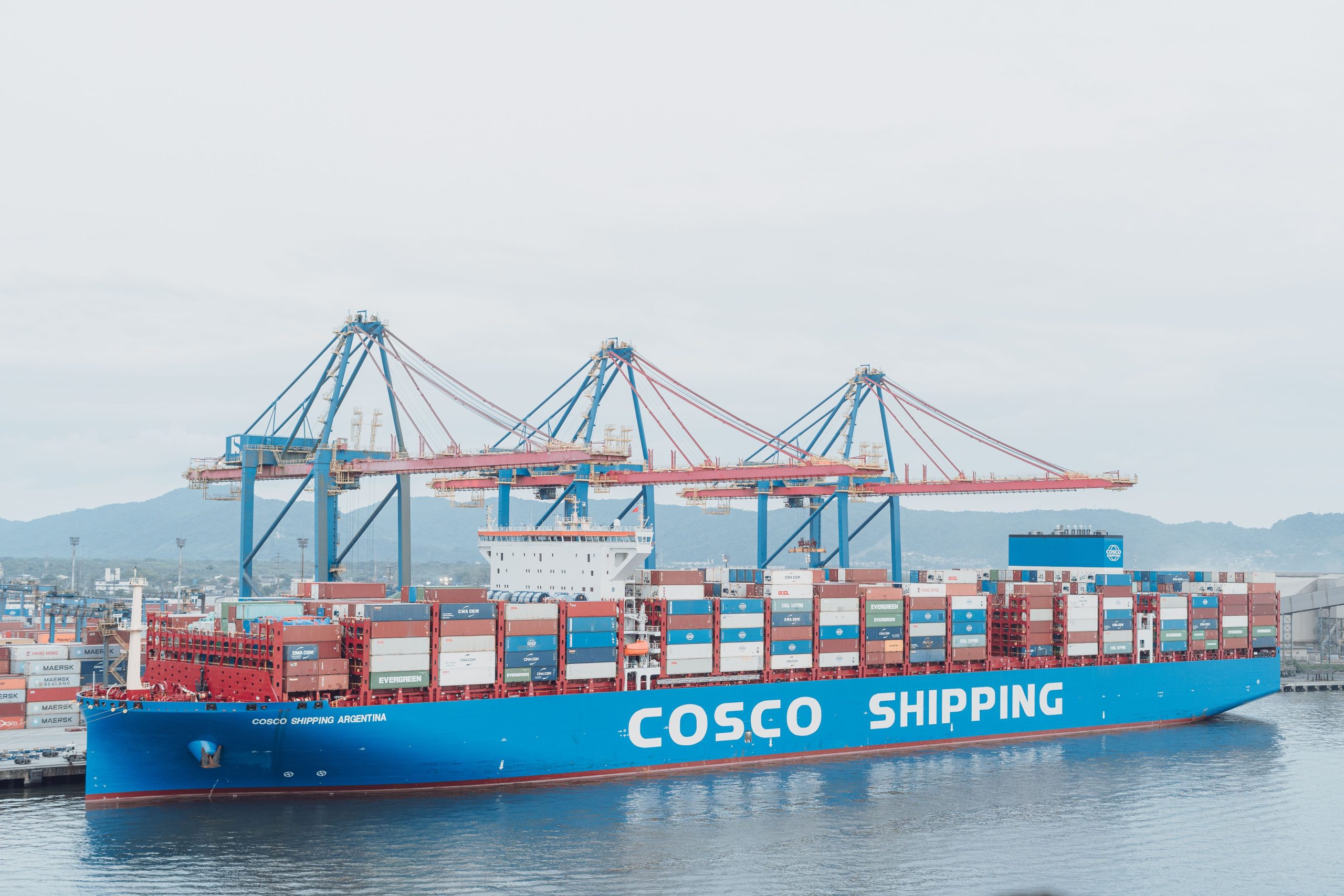
Exports tell the same story. In 2025 Vietnam shipped US$475 billion of goods, up 17%, and the United States remained the largest market at US$153.2 billion. The detail worth pausing on: foreign-invested firms accounted for US$367.1 billion of that, or 77.3% of all exports.
In other words, Vietnam has succeeded brilliantly as the "alternative factory," while the highest-value layers — the brand, the distribution, the relationship with the overseas customer — mostly sit elsewhere. That gap is exactly where a new generation of Vietnamese founders is stepping in.
US tariffs: an advantage that never stands still
A cost advantage can be repriced overnight. On 2 July 2025 the US announced a trade framework with Vietnam: a 20% tariff on Vietnamese goods and 40% on goods suspected of being transshipped from China. On 20 February 2026 the US Supreme Court ruled that IEEPA does not authorise the president to impose tariffs, voiding the reciprocal tariffs. The administration immediately replaced them with a 10% global surcharge under Section 122, which the law caps at 150 days.
When that window closed, a different tool took over. From 24 July 2026, Vietnamese goods face an additional 12.5% Section 301 duty following the investigation into forced-labour import policies; a separate intellectual-property investigation into Vietnam, opened on 29 May 2026, remains pending. Thailand, the Philippines and Singapore face the same 12.5%, while Malaysia, Indonesia and Cambodia face 10%.
The lesson for founders is not the specific rate, which has changed four times in little more than a year. It is this: if the whole business — entity, accounts, contracts, people — sits in one country, then every time policy in your destination market turns, your only option is to absorb it.
A generation of founders selling to the world
Alongside the foreign capital, domestic policy is pushing the private sector hard. Resolution 68-NQ/TW of 4 May 2025 targets two million active enterprises by 2030, 20 enterprises per 1,000 people, and at least 20 large firms integrated into global value chains.
On the ground, this cohort already exists: consumer brands selling through international marketplaces, software companies serving clients in the US and Europe, small manufacturers moving from contract work to products under their own name. They have a product, a cost-competitive team and paying customers abroad.
What they usually lack is not capability but institutional infrastructure — the plumbing that lets a company operate as a global business. And much of that plumbing sits outside the border.
Why founders need a second base
Market access: Many enterprise buyers, distributors and funds are simply more comfortable contracting with an entity in Singapore, Dubai or Europe than with a company registered only in Vietnam. A hub entity shortens due diligence, though it never substitutes for the real strength of the business.
Banking and payments: Stripe's own availability page currently lists Singapore, the UAE, Malaysia and Thailand as supported markets — and Vietnam is not on the list. For a company selling software or consumer goods online, that seemingly small detail flows straight into cash flow.
Talent: Scaling means hiring in destination markets and moving key people back and forth. A base with a clear work-visa system makes that far easier.
Travel friction: The Vietnamese passport ranks 84th on the 2026 Henley Passport Index, with 48 destinations accessible without a visa in advance. For a founder who needs to see customers in the US, Europe or Australia, every trip means an application, a wait, and the risk of a missed meeting.
The doors for founders are moving
Founder pathways do not stand still, and this is the point most often missed. Canada, once a popular choice, stopped accepting new Start-up Visa commitments from 1 January 2026, leaving only a window to 30 June 2026 for holders of 2025 commitment certificates; the replacement pilot has yet to publish full criteria.
In Asia, Singapore's EntrePass is open to founders holding at least 30% of an ACRA-registered private limited company, provided the business meets one of several tests — such as raising at least SGD 100,000 in a single round, backing from a recognised incubator or accelerator, or registered intellectual property. The UAE offers a Golden Visa category for entrepreneurs, which asks for proof of an innovative or technical project and a letter from a business incubator or relevant authority.
Then there are residence-by-investment programmes, which do not require a startup model but give the whole family a stable right to live somewhere — the UAE Golden Visa or Malaysia's MM2H, for example. For many founders this becomes a layer of "mobility insurance" that is separate from the fate of any one company.
A practical strategy for Vietnamese investors
Start from the market, not the visa. Ask where your customers, distributors and investors are, and where they are used to signing contracts. Your second base belongs on that axis — not wherever is being marketed most loudly this year.
Separate your residence from your business risk. A visa tied to a company wobbles when the company does. Many founding families add an independent residence-by-investment right, so the family's freedom to travel does not hinge on a funding round.
Build structures with substance and transparency. An overseas entity needs real activity, clean books, and compliance with outward-investment rules, tax law and international information exchange. A structure built only to "dodge" tariffs or income tax usually creates more risk than it removes.
Keep Vietnam as the operating core. Your costs, team and production capability are still your competitive edge. A second base extends the company's reach; it does not replace its foundation.
Frequently asked questions
Do Vietnamese founders need to leave Vietnam to set up an overseas entity?
No. The most common model keeps the team and operations in Vietnam while the overseas entity handles contracts, payments and fundraising. Outward investment must still follow the current Vietnamese procedures, and legal and tax advice on both ends is essential.
Will a company registered in another country help avoid US tariffs?
Don't count on it. Tariffs follow the origin of the goods, not where the company is registered, and the US has already set a 40% rate for suspected transshipment. The value of a second base lies in market access, banking and people.
Is a startup visa or residence by investment the better fit?
It depends on the goal. A startup visa such as the EntrePass is tied to the company's progress; residence by investment is tied to an asset and usually covers the family. Many founders combine the two in stages.
NAC strategic insight
China+1 put Vietnam at the centre of the global manufacturing map, but the next generation of founders will be judged on a different question: who owns the brand, the customers and the cash flow abroad. Answering it means operating as a multinational earlier than previous generations did — and that starts with a solid second base, chosen deliberately rather than in a rush.
NAC works with founders and their families to identify which base fits their target markets, which residence route stands apart from business risk, and which property can serve as both a home and an asset — Kuala Lumpur projects such as Oxley Towers KLCC, for instance. If you are weighing your next move, book a consultation with NAC and we will build a structure around your long-term goals together.
Sources
- The Investor / General Statistics Office — Vietnam's 2025 FDI disbursement hits 5-year high (2026)
- VnEconomy — Disbursed FDI hits five-year high of $17.25 bln in 8M (2026)
- Viet Nam News — Viet Nam runs trade surplus of over $20 billion in 2025 (2026)
- DFDL — New U.S. Section 301 tariffs on ASEAN imports (2026)
- Singapore Ministry of Manpower — EntrePass eligibility (2026)