Contents
Geopolitical Hedging: The New Safe-Haven Map for Private Wealth and What It Means for Vietnamese Families
Tariffs, a Gulf conflict and a world splitting into blocs are redrawing where private wealth feels safe. Four criteria for a Vietnamese family's second base.
Since 2025, tariffs, court rulings and open military conflict have shown that no wealth hub is immune to geopolitical risk. The world's wealthy have stopped looking for a single perfect refuge and are instead building portfolios of residence rights spread across blocs. For a Vietnamese family, a second base is best judged on four criteria: neutrality, rule of law, currency stability and the ability to diversify outside the bloc where most of the family's wealth already sits.
Most writing about "safe havens" is aimed at Americans weighing citizenship-based taxation or Britons reacting to the end of the non-dom regime. Vietnamese investors are in a very different seat. Their wealth has grown inside an export economy that sits between the great powers — which makes the hedging question more concrete for them than for almost anyone.
A world splitting into blocs, seen from 2025–2026
Tariffs became a geopolitical tool. On 2 April 2025 the United States announced "reciprocal" tariffs on dozens of partners, with Vietnamese goods initially slated for 46%. On 2 July 2025 the two sides settled on 20%, with transshipped goods facing 40% — a structure that treats Vietnam through the lens of US–China rivalry, not simply as a trading partner.
The rules changed mid-game. On 20 February 2026 the US Supreme Court ruled 6–3 that IEEPA does not authorise the president to impose tariffs, striking down the duties built on it. Within days, a temporary global tariff under Section 122 took effect on 24 February 2026, for up to 150 days. Exporters now plan in an environment where both the rate and its legal basis can shift within weeks.
Military risk reached places that felt insulated. In early March 2026, after a joint US–Israeli strike on Iran, Iranian retaliation hit airports, ports and hotels across the Gulf. Dubai International and Abu Dhabi's Zayed International both sustained damage, and the UAE closed its exchange for two days as a precaution. For a city whose identity was built on distance from regional conflict, it was an unprecedented test.
The safe-haven map is being redrawn
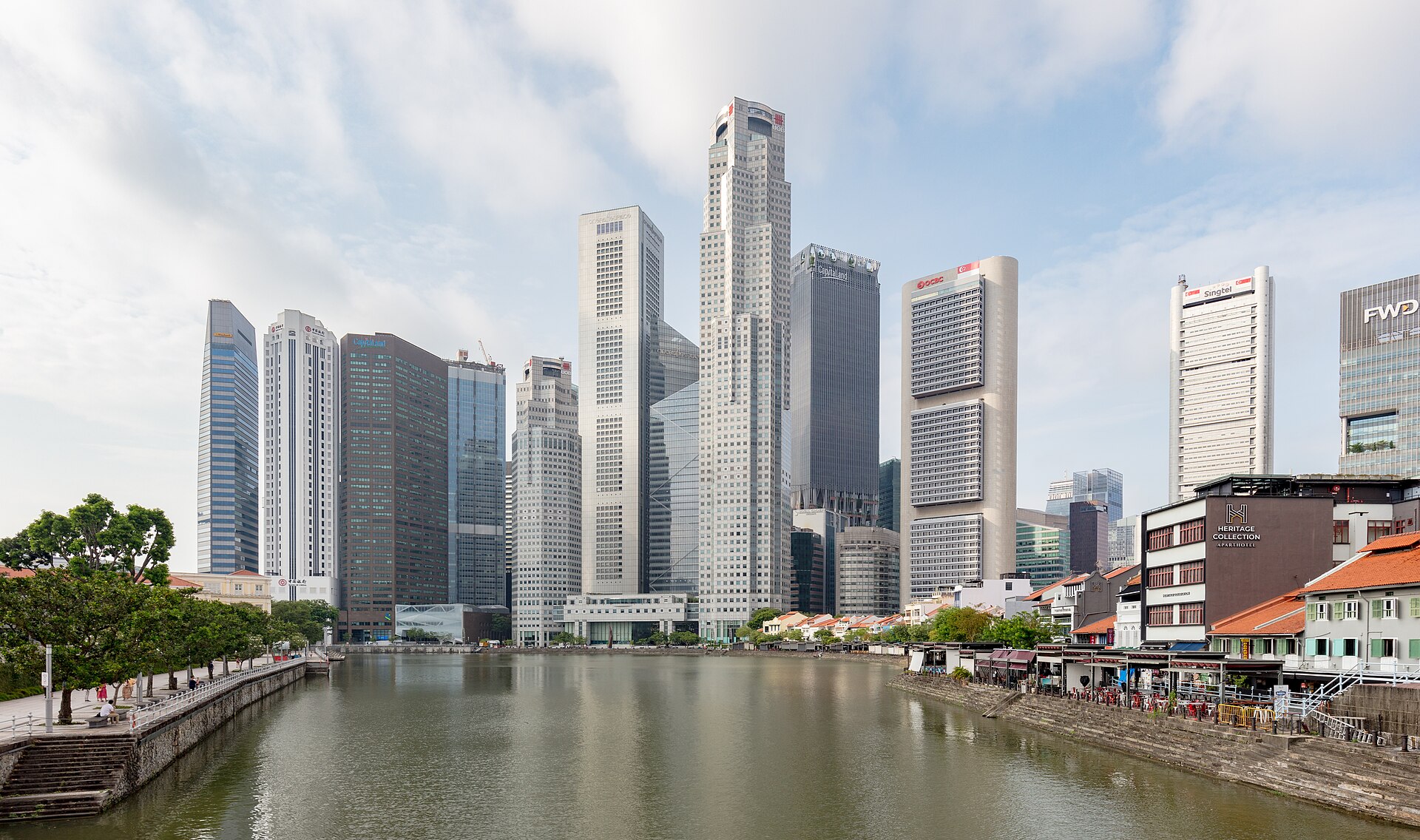
From "moving house" to "sovereign portfolios". The Henley Private Wealth Migration Report 2026, released on 16 June 2026, describes the wealthy building "sovereign portfolios" of residence rights, citizenships, investments and business interests across several jurisdictions rather than staying tied to one. Its new framework scores countries on 12 dimensions, including rule of law, geopolitical stability and capital mobility. Singapore leads with 79.5, followed by New Zealand at 75.8; Cyprus scores 73.5 and Portugal 72.5. Switzerland, at 70.8, is described as benefiting from demand for stability and capital preservation amid elevated geopolitical uncertainty.
Even the strongest magnet is hedging. Henley also reports that enquiries from UAE residents rose 41% between Q4 2025 and Q1 2026, while applications for alternative residence or citizenship rose 29%. The report frames this as diversification and optionality, not an exodus — a telling detail, because it shows that people already living in a "safe" hub still want a second exit.
Central banks are doing the same thing. The World Gold Council's 2026 central bank survey, published on 16 June 2026, found that 89% of reserve managers expect global central bank gold holdings to rise over the next 12 months, and 74% expect the US dollar's share of reserves to fall within five years. When the institutions that hold a nation's savings diversify away from a single currency, private families have good reason to review their own mix.
Where the Vietnamese family stands
Vietnam is creating wealth quickly. Knight Frank's Wealth Report 2026 — an edition framed around how private capital is adapting to "a fractured geopolitical landscape" — projects the number of ultra-high-net-worth individuals (US$30 million and above) in Vietnam to grow 59% over the five years to 2031, among the fastest rates in the world.
Bloc concentration risk. Most of these families hold their wealth in Vietnamese dong, in domestic property and businesses, with income tied to export supply chains. When a tariff can move from 46% to 20% in a single negotiation, the value of a factory or an industrial-park stake moves with it — through no fault of the owner.
The lesson of multi-alignment. Vietnam keeps balanced relations with many powers and belongs to several trade agreements at once. That is a strength at the national level, but it does not automatically shield an individual family's balance sheet. The smarter move is to apply the same "don't pick a side" logic to your own portfolio.
Four criteria for a second base
Neutrality and geopolitical distance: A second base only hedges if it does not share the same risk as your main assets. If your wealth is sensitive to US–China tension, the second base should sit somewhere less exposed to that axis.
Rule of law: Independent courts, respected property rights and no retroactive rule changes are what let you sleep while you are far away. It is also one of the dimensions Henley builds into its 2026 scoring.
Currency stability: A euro-area country such as Cyprus or Portugal, or a dollar-based economy such as Panama, gives a Vietnamese family a strong-currency leg alongside the dong. Each has its own risks, so what matters is the combination, not a mythical "perfectly safe" currency.
Diversification across blocs: Spread assets and residence rights across blocs — for example one leg in the European Union and one in the Americas or the Middle East — so that a shock in one region does not drag the whole family with it.
The cost and the limits of a safe haven
Nowhere is immune, and the Gulf in March 2026 proved it. Residence programmes can also change their terms, raise thresholds or close; every residence right brings tax-reporting duties, holding costs and minimum-stay rules. Hedging is therefore a deliberate expense, closer to an insurance premium than an investment that promises a return.
A practical strategy for Vietnamese investors
Map your risks before you pick a country. List the family's assets, income sources and currencies, then flag everything that shares one type of risk — tariffs, exchange rates or policy. The second base should fill exactly that gap.
Put one leg in a different bloc. For many families, a euro-area residence such as the Cyprus permanent residency programme is a sensible starting point, combining European rule of law, a strong currency and a rentable property market.
Add a currency leg, not just an address. Assets linked to residence should sit in a different currency from your core holdings — for instance a US-dollar-priced apartment in Panama alongside euro and dong assets.
Review every year, not in a crisis. Like UAE residents in early 2026, families with a plan already in place tend to stay calmer when events turn. Set it up before you need it, then adjust as the world moves.
Frequently asked questions
Is any country truly safe from geopolitical risk?
No. Even the UAE, the leading destination for millionaire migration in recent years, was directly affected by the March 2026 conflict. The realistic goal is to reduce concentration, not to find a place with no risk at all.
Does a Vietnamese family need to leave Vietnam to hedge geopolitical risk?
No. Most hedging strategies keep Vietnam as the main place to live and do business, while adding residence rights and assets in another bloc that can be used when needed.
Which criterion should come first when choosing a second base?
Start from your family's biggest exposure. If your wealth depends on exports, prioritise geopolitical distance; if most of it is in dong, prioritise currency stability. Rule of law is the foundation under every option.
NAC strategic insight
A world splitting into blocs is not a reason to panic; it is a reason to redesign. The tariffs, rulings and conflicts of 2025–2026 show that risk can arrive from directions nobody forecast, and those with a contingency plan in place are always in a stronger position than those improvising mid-crisis. For Vietnamese families, the advantage is that wealth is still growing fast — which means there is still time to rebalance calmly.
NAC works with Vietnamese investors to choose a second base against exactly these four criteria, from European residency to income property such as Pullman Panama City. If you would like to start with a risk map built around your own family, book a consultation with NAC.
Sources
- Henley & Partners — Henley Private Wealth Migration Report 2026, press release (2026)
- Knight Frank — The Wealth Report 2026 (2026)
- Kitco — Record 45% of central banks plan to increase gold holdings, WGC survey finds (2026)
- EY — US Supreme Court rules IEEPA does not authorize presidents to impose tariffs (2026)
- Cyprus Mail — Gulf economies face sharpest disruption since the pandemic (2026)