If you're a foreign buyer evaluating a branded residence in Southeast Asia, you're likely comparing four destinations: Vietnam, Bali, Phuket, and Penang. Each market has a distinct ownership framework, risk profile, brand presence, and lifestyle proposition. This analysis breaks down the key variables side by side.
At a Glance
| Metric | Vietnam | Bali | Phuket | Penang |
|---|---|---|---|---|
| Ownership (foreign) | 50-yr leasehold | Nominee/leasehold | 30+30 leasehold | Freehold (MM2H) / Leasehold |
| Entry price (branded) | $350K–$1.2M | $300K–$800K | $400K–$2M+ | $250K–$700K |
| Gross yield (marketed) | 8–12% | 10–15% | 7–10% | 4–6% |
| Net yield (realistic) | 5–7% | 6–9% | 5–7% | 3–5% |
| Market maturity | Emerging | Mid-cycle | Mature | Mature |
| Brand presence | Growing rapidly | Established | Established | Limited |
| Capital appreciation potential | High | Moderate | Low–Moderate | Moderate |
| Personal use (days/yr) | 30–45 | 30–60 | 30–45 | Flexible |
Vietnam: The Emerging Market Play
Best for: Buyers prioritising capital appreciation and first-mover positioning.
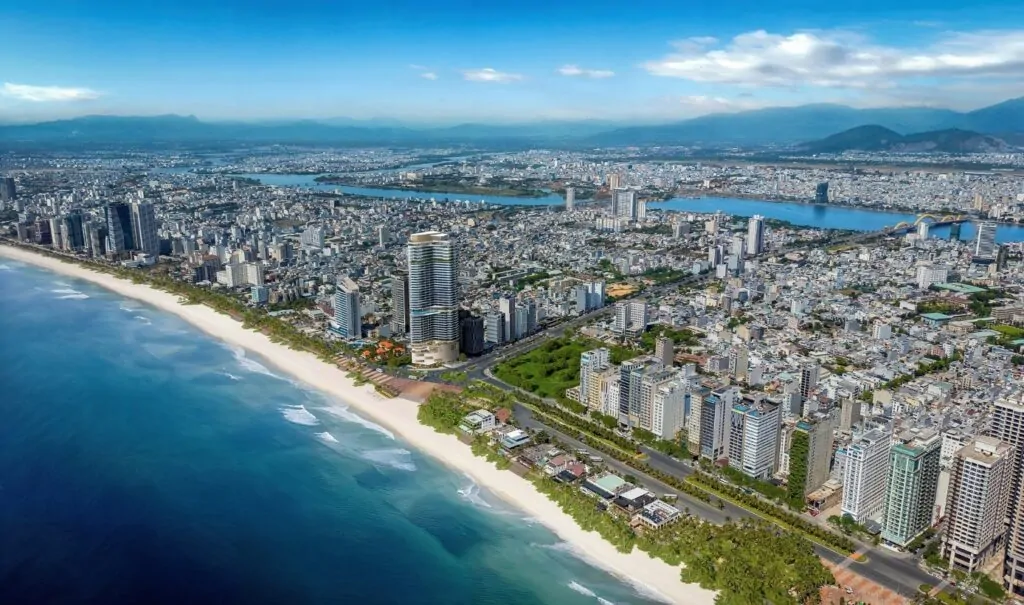
Vietnam's branded residence market is the youngest of the four — and that is precisely its advantage. Prices in Da Nang's emerging coastal corridor are 30–50% below comparable branded product in Phuket. The brand pipeline (JW Marriott, Nobu, Mandarin Oriental, Four Seasons) is actively expanding, which signals institutional confidence in long-term demand.
The 50-year leasehold structure is Vietnam's primary foreign ownership constraint. However, for a buyer with a 15–25 year holding horizon — a summer home for the family during the children's school years — this is rarely a practical limitation.
Strengths: Price point, growth trajectory, brand quality, emerging infrastructure
Risks: Leasehold-only ownership, regulatory environment still developing, resale market thinner than mature destinations, management fee structures vary significantly
Bali: The Established Lifestyle Market
Best for: Buyers prioritising lifestyle quality and an established international community.
Bali is Southeast Asia's most recognised luxury lifestyle destination for foreign buyers. The branded residence market here includes Aman, Rosewood, and Six Senses — names that command premium pricing and extraordinary design. The Seminyak–Canggu–Pererenan corridor in particular has seen consistent demand from Western and Australian buyers.
Ownership for foreigners in Bali is more legally complex than the other three destinations. Indonesian law does not permit foreign freehold ownership of land. In practice, most foreign-owned branded residences operate through a PT PMA (foreign-owned company structure) or nominee arrangement — both of which carry risks that buyers must address with qualified Indonesian legal counsel.
Strengths: Established lifestyle infrastructure, strong tourism brand recognition, excellent Airbnb market, spiritual/wellness lifestyle appeal
Risks: Nominee structure legal exposure, significant infrastructure congestion, over-development in certain corridors, Airbnb saturation reducing individual yields, recent regulatory changes affecting short-term rentals
Phuket: The Mature Blue-Chip Market
Best for: Buyers seeking stability, brand depth, and an established resale market.
Phuket is Southeast Asia's most mature foreign-buyer branded residence market. The island hosts Amanpuri (arguably the world's most prestigious resort residences), Trisara, and a large pipeline of Marriott, Hyatt, and Minor Hotels projects. The infrastructure — international schools, hospitals, expat services, and direct flights from major Asian and European hubs — is the most developed of the four destinations.
Thailand's leasehold structure for foreigners allows 30-year initial terms with a 30-year extension written into the contract, providing de facto 60-year security. Thai company structures can also facilitate longer-term ownership, though legal advice is essential.
The trade-off: Phuket prices have already captured the "emerging market" premium. Entry prices for branded residences are the highest of the four, and capital appreciation expectations are accordingly more modest.
Strengths: Mature infrastructure, established resale market, regulatory stability, strong direct flight connectivity, excellent branded hotel management
Risks: Pricing has matured, overcrowding during peak season, some corridors (Patong) overbuilt, yield compression as supply grows
Penang: The Heritage Premium
Best for: Malaysia My Second Home (MM2H) holders, buyers prioritising cultural richness and urban lifestyle over resort yield.
Penang occupies a distinct niche. George Town's UNESCO World Heritage status creates a natural supply constraint that simply doesn't exist in resort destinations — heritage building restrictions limit new development, underpinning long-term asset values.
The key advantage for qualifying buyers: Malaysia's MM2H program allows foreign participants to purchase property on a freehold basis, providing a level of ownership security unavailable in the other three destinations. For families who have or are pursuing MM2H alongside a Penang property, this significantly changes the risk calculus.
Yields are the lowest of the four destinations — Penang is not a resort rental market in the same way. But capital appreciation has been steady, and the lifestyle value (food culture, multicultural society, English widely spoken, proximity to Singapore) is genuinely differentiated.
Strengths: Freehold available (via MM2H), heritage supply constraint, urban lifestyle, cultural depth, proximity to Singapore
Risks: Lowest yields of the four, more limited branded residence options, not a classic summer home/beach resort market, MM2H qualification requirements
The Comparison Verdict
There is no universally "best" destination — each serves a different buyer profile:
- Maximum appreciation potential with emerging market risk appetite → Vietnam
- Established lifestyle and community with highest yield expectations → Bali (with proper legal structuring)
- Blue-chip stability with deepest infrastructure → Phuket
- Freehold security and heritage urban lifestyle → Penang (particularly for MM2H holders)
Many sophisticated buyers we work with ultimately structure holdings across two markets — commonly Vietnam (for growth) paired with either Phuket (for stability) or Penang (for freehold security and lifestyle). This portfolio approach mirrors how families think about diversification in other asset classes.
NAC advises clients on how branded residence purchases in Southeast Asia integrate with broader residency, tax, and family wealth planning. Contact us to discuss a market that fits your specific situation.